


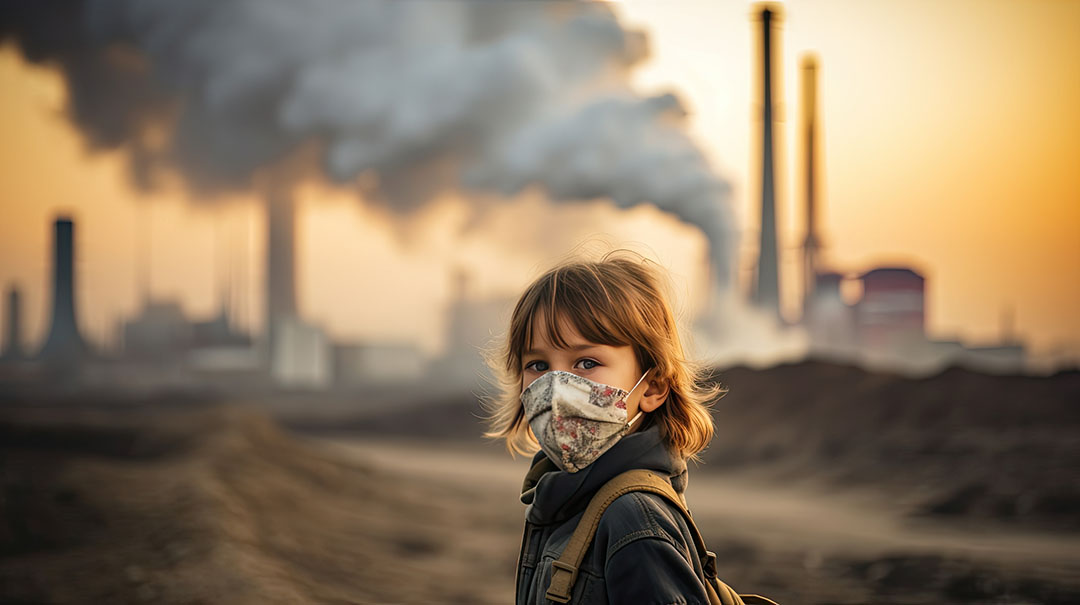
Air pollution is not only an environmental threat; it is also a major factor that can directly affect children’s cognitive development, learning ability, and concentration. Because children’s brains grow rapidly and are more sensitive to pollutants, they are far more vulnerable than adults.
In this article, we take a scientific, parent-focused approach to examine how air pollution influences children’s brain performance, and we end with practical strategies to protect children on high-pollution days.
Why Are Children More Affected by Air Pollution Than Adults?
Children’s bodies are still developing, and their immune systems are not yet fully mature. For this reason, pollutants have a stronger impact on their brain, lungs, and attention system.
-
Faster breathing rate → more pollutants enter the body
-
Shorter height → inhaling pollutants at the level where pollution tends to concentrate
-
Developing brain → higher sensitivity to inflammation and oxygen shortage
-
Immature immune system → greater vulnerability
The Impact of Air Pollution on Children’s Learning and Concentration
Recent research suggests that air pollution can reduce a child’s cognitive performance even after only a few hours. These effects become more noticeable on days with heavy pollution.
1) Reduced Oxygen Delivery to the Brain
Fine particulate matter (PM2.5) can cause inflammation and reduce oxygen delivery to brain cells, resulting in slower information processing.
2) Weaker Focus and Sustained Attention
Studies have shown that children may experience up to 30% lower concentration on polluted days. This is clearly noticeable during homework or online classes.
3) Impaired Working Memory
Working memory is essential for homework, problem-solving, and even reading. Air pollution can reduce performance in this area.
4) Increased Mental Fatigue
Air pollution triggers inflammation in the body and tires the brain more quickly. A child may become bored or mentally drained sooner than usual.
5) Increased Anxiety and Irritability
Some pollutant gases, such as NO2 and O3, can affect a child’s mood and lead to restlessness.
6) Poorer Sleep Quality and Negative Effects on Learning
Polluted air can put pressure on a child’s sinuses and breathing, reducing deep sleep—so learning and memory are affected as a result.
Signs of Reduced Concentration on Polluted Days
-
Restlessness and distractibility
-
More forgetfulness than usual
-
Getting tired quickly while studying
-
Less interest in homework
-
Slower processing speed
-
Mood changes (low energy, irritability, anger)
Practical Strategies for Parents on High-Pollution Days
1) Limit Going Outdoors
On days when the Air Quality Index (AQI) is above 100, it’s better to reduce outdoor activity.
2) Use a Suitable Mask for Older Children
For children over age 6, appropriately sized N95 masks can be used.
3) Seal Windows and Reduce Air Infiltration
Keep windows closed on polluted days to prevent polluted air from entering.
4) Use an Air Purifier
Devices with a HEPA filter are the best option for reducing PM2.5 particles indoors.
5) Increase Water and Fluid Intake
Fluids can reduce inflammation and help the body eliminate pollutants.
6) Add More Antioxidant-Rich Fruits to the Diet
Fruits like kiwi, oranges, apples, strawberries, and leafy green vegetables help counter the effects of pollution.
7) Do Light Indoor Physical Activity
Instead of outdoor play, choose indoor movement games to help children release energy.
8) Manage Study Time Wisely
On polluted days, schedule heavier studying in the morning or at night when pollution levels are typically lower.
9) Ventilate the Child’s Room at Night
If the air is cleaner at night, ventilate for a few minutes to refresh indoor air.
10) Use Focus-Boosting Games
Because concentration tends to drop on polluted days, games like puzzles, board games, and attention-based games can help.
Suggested Parent Plan for High-Pollution Days (Daily Checklist)
□ Check the air pollution index before starting the day
□ Close windows and turn on the air purifier
□ Prepare water and healthy, antioxidant-rich snacks
□ Plan short, structured study sessions
□ Do light indoor movement activities
□ Monitor signs of mental fatigue
□ Ventilate the room before bedtime
Conclusion
Air pollution has a significant impact on children’s learning, concentration, and cognitive performance. However, parents can reduce many of these harms with simple and effective actions. The most important principle is creating a safe, healthy, low-pollution environment on high-risk days so the child’s brain can continue its natural development without extra strain.