


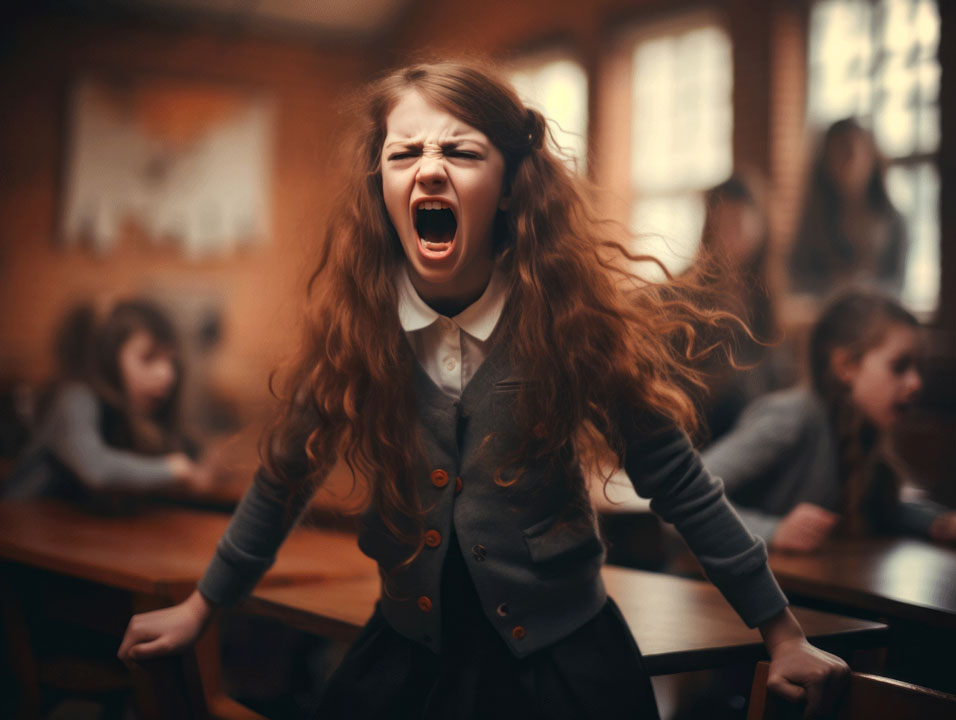
Student misbehavior and lack of discipline are among the most serious and persistent challenges in schools. If not managed correctly, they can disrupt not only learning, but also the classroom’s emotional climate, the teacher–student relationship, and even the overall culture of the school. Dealing with a disruptive student is not merely a disciplinary issue—it is deeply developmental, psychological, and social.
In this article, we take an analytical look at what misbehavior is, why it happens, and the most effective ways to address it.
How Should We Define Student Misbehavior?
Before choosing any response, we need a clear understanding of what “misbehavior” really means. Misbehavior is not only noise, inattention, or breaking rules—it is often a sign of an inner conflict, an unmet need, or difficulty regulating emotions. Many behaviors labeled as “disruptive” are actually attempts to be seen, heard, or to gain control over a situation.
When misbehavior is viewed only as a “violation,” the response is usually punitive and short-term. But when it is treated as a developmental message, our approach changes: instead of suppressing behavior, we look for its root causes.
Root Causes of Misbehavior in Students
1) Psychological and Emotional Factors
Many disruptive students are experiencing emotions they cannot manage—anxiety, anger, rejection, lack of attention, or family pressure. A student who feels emotionally invisible may discover that disrupting the class is the fastest way to be noticed.
2) Family Factors
Parenting style plays a major role. Both overly strict and overly permissive parenting can contribute to misbehavior. In some cases, unclear rules at home or intense family conflict prevents the student from learning healthy boundaries.
3) School and Instructional Factors
Monotonous teaching, lack of student participation, imposed rules, and a controlling classroom atmosphere can increase misbehavior. A student who feels they have no voice may turn to negative behaviors to express themselves.
Why Punishment Usually Fails
Punishment is one of the most common responses, but educational research shows that—especially when harsh or humiliating—punishment rarely creates long-term improvement. A punished student may temporarily “behave,” but internally they may develop anger, fear, or hidden resistance.
Punishment often sends the wrong message: “You are the problem,” instead of “This behavior needs to change.” Over time, this weakens self-esteem and can push the student toward even more challenging behavior.
External Control vs. Self-Discipline
A common school mistake is focusing only on external order. External order exists when students follow rules only when supervision is present. Self-discipline develops when students understand the reasons behind rules and see themselves as responsible for their actions.
The educational goal should not be silence and surface-level order, but raising students who behave responsibly even without direct supervision. This requires developmental and participatory approaches.
The Teacher’s Role in Managing Misbehavior
The teacher is the first and most important person who faces disruptive behavior. The teacher’s immediate reaction often determines whether the behavior escalates or improves. Teachers who respond with anger, humiliation, or indifference may unintentionally intensify misbehavior.
In contrast, a teacher who stays calm, separates behavior from identity, and uses dialogue creates the conditions for lasting change. Classroom management is less about control and more about communication.
Creating Clear, Participatory Classroom Rules
Rules imposed without student participation often create resistance. Involving students in setting classroom rules increases ownership and responsibility. When students help create the rules, following them feels meaningful.
Rules should be limited, clear, and practical. Too many vague rules create confusion and indifference rather than discipline.
The Principal’s Role in Discipline Culture
School leadership strongly shapes the school’s discipline culture. If a principal views misbehavior as purely administrative and punitive, that mindset quickly spreads to teachers and students. Discipline becomes a tool for control, not an opportunity for growth.
A principal with a developmental mindset sees misbehavior as a signal of deeper needs and builds discipline policies around education, dialogue, and correction—not quick punishment.
The Importance of Consistency and Fairness
A major trigger for misbehavior is perceived injustice. When students believe rules are applied inconsistently—or that some students receive special treatment—trust in the school system breaks down. This often appears as resistance, defiance, or disruptive behavior.
Consistency does not mean harshness. It means predictability: students should understand that each behavior has a clear consequence—and that it applies equally to everyone. This environment supports responsibility and self-control.
The Family’s Role in Managing Misbehavior
No discipline plan works without family cooperation. Some parents become defensive when their child’s behavior is questioned, rather than working with the school. This not only blocks solutions, but also sends a confusing message to the student and may reinforce misbehavior.
Schools should treat families as developmental partners, not opponents. Clear communication—without labeling and focused on solutions—encourages parents to cooperate. When a student feels school and home are aligned, the chance of improvement rises significantly.
Dialogue-Based Responses Instead of Emotional Reactions
One of the most effective approaches to misbehavior is educational dialogue—where the student has space to explain their perspective and feels heard. This helps them analyze their behavior and accept responsibility.
Emotional, impulsive reactions may create a momentary sense of control, but they often damage long-term change. Calm dialogue—even if slower—is the foundation of lasting improvement.
Separating Behavior From the Student’s Identity
A key principle in effective discipline is separating behavior from personality. When teachers label a student as “disruptive” or “problematic,” they often close the door to change. The student may adapt their identity to the label rather than improving behavior.
Focusing on a specific, changeable behavior—without attacking the student—communicates respect and reinforces the student’s ability to improve. This protects self-esteem and increases the likelihood of change.
Using Educational Consequences Instead of Punishment
An educational consequence is different from punishment. Punishment is often humiliating, sudden, and unrelated to the behavior. A consequence is proportional, predictable, and logically connected to what happened.
For example, if a student regularly disrupts class, a constructive consequence could be involving them in creating classroom rules or assigning them a responsibility that increases accountability—rather than humiliating them.
Educational consequences help students understand the link between behavior and outcomes without feeling attacked or treated unfairly.
Prevention Matters More Than Correction
Many discipline problems are preventable. A more engaging classroom, active participation, emotional awareness, and varied teaching methods can reduce disruptive behavior significantly. Prevention requires planning and developmental understanding—but it is far less costly than constant correction.
A school that focuses on prevention builds a healthy environment instead of constantly reacting to mistakes.
Final Summary
Handling disruptive students effectively requires a shift from control to development. Misbehavior is often a sign of deeper needs or struggles, and responding to it must be conscious, humane, and educational. When school leaders, teachers, and families share the same understanding, misbehavior can become not a threat—but an opportunity for growth.
Real discipline is created when students choose responsible behavior out of awareness—not out of fear.






 Students)